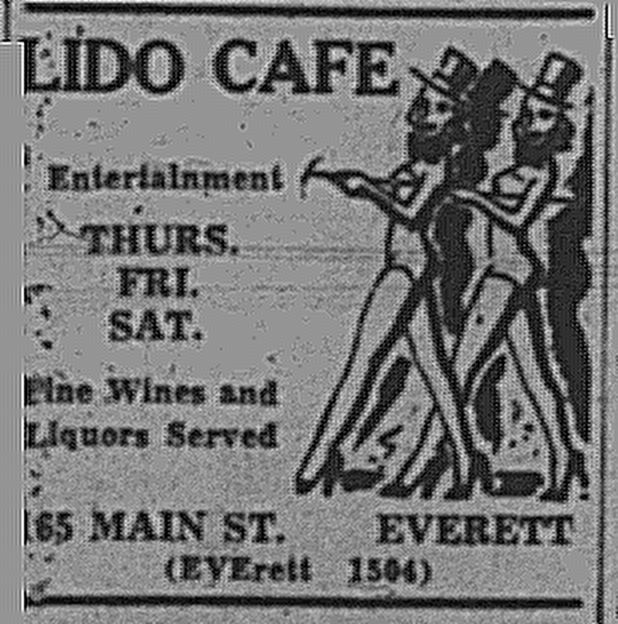
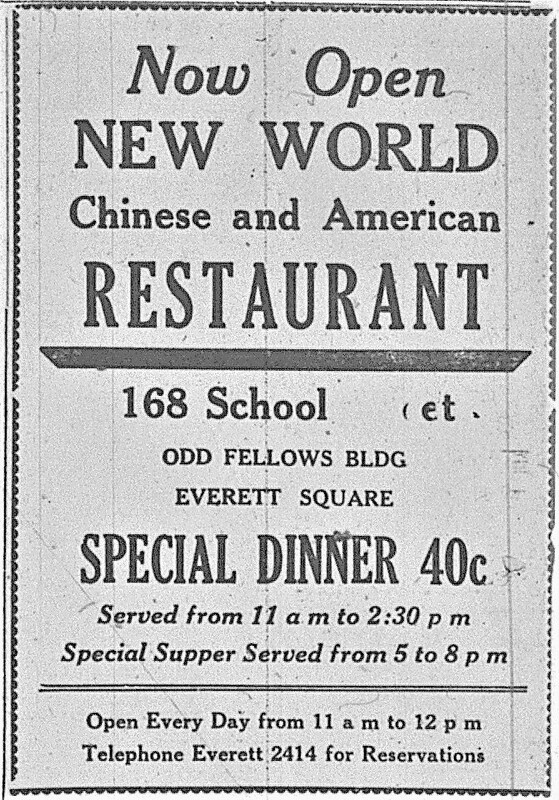
The building which housed the Lido Cafe is still there. If you look around the front entrance, you can still see remnants of the facade from years ago.
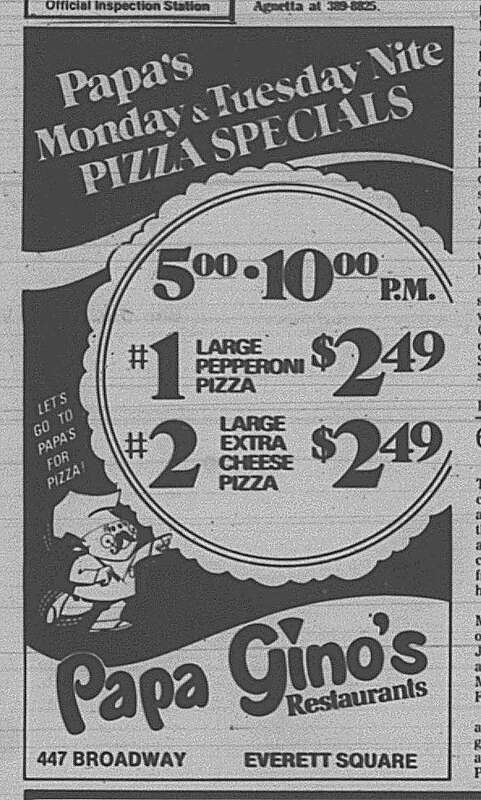
Papa Gino's came to Everett in 1963 as "Piece o' Pizza", a new chain founded in East Boston a couple of years before. People of a certain age will remember the person standing in the front window tossing the dough up in the air.
In 1968 they changed their name to Papa Gino's and expanded all over the northeast. They left Everett in the early 2000s,
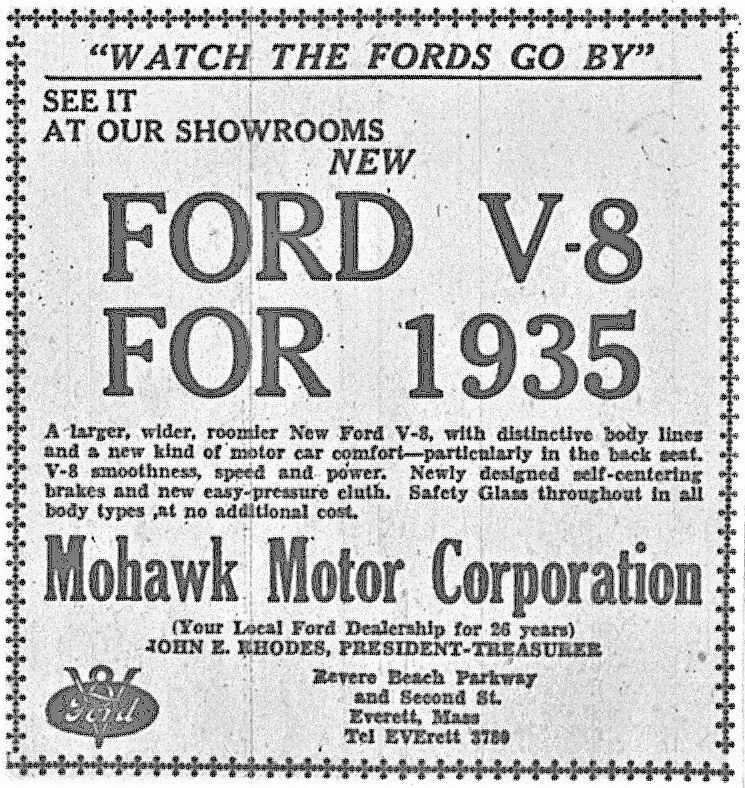
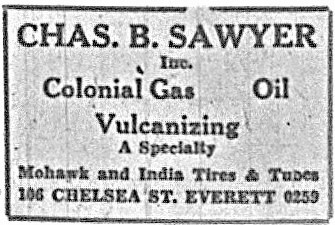
Mohawk Motors was also a Ford dealer in addition to being an auto repair shop. One of its locations, Second St. and Revere Beach Parkway, is still being used for auto repair.
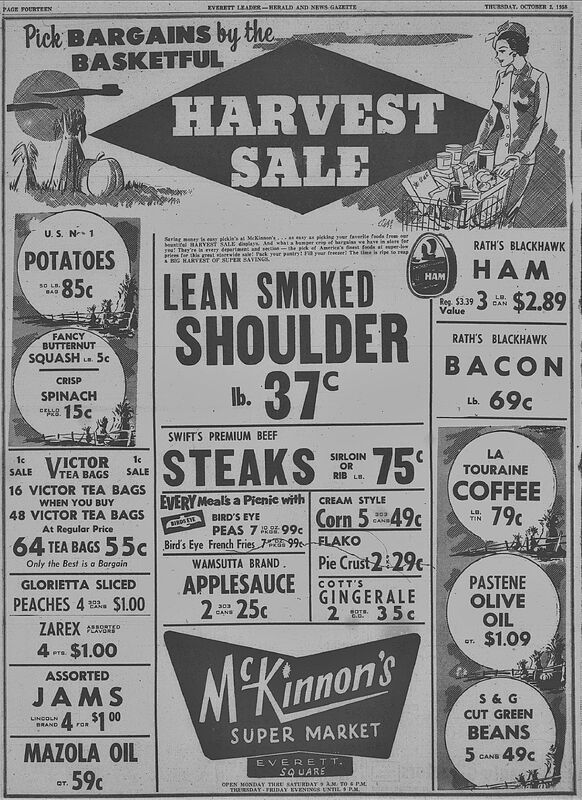
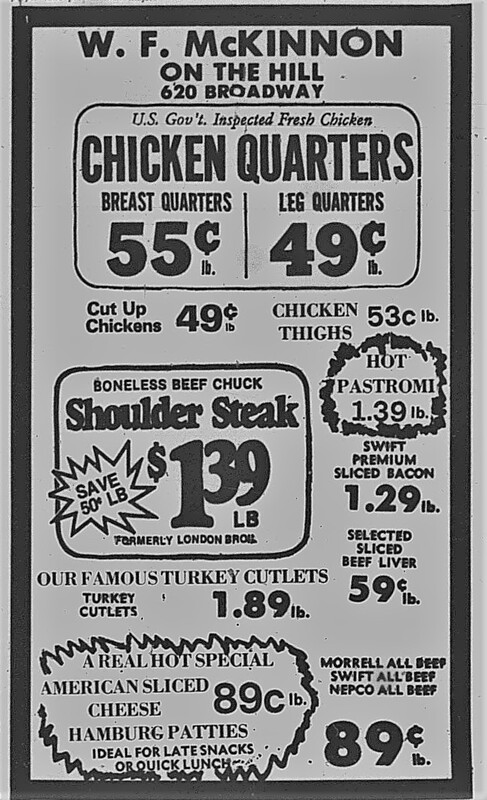
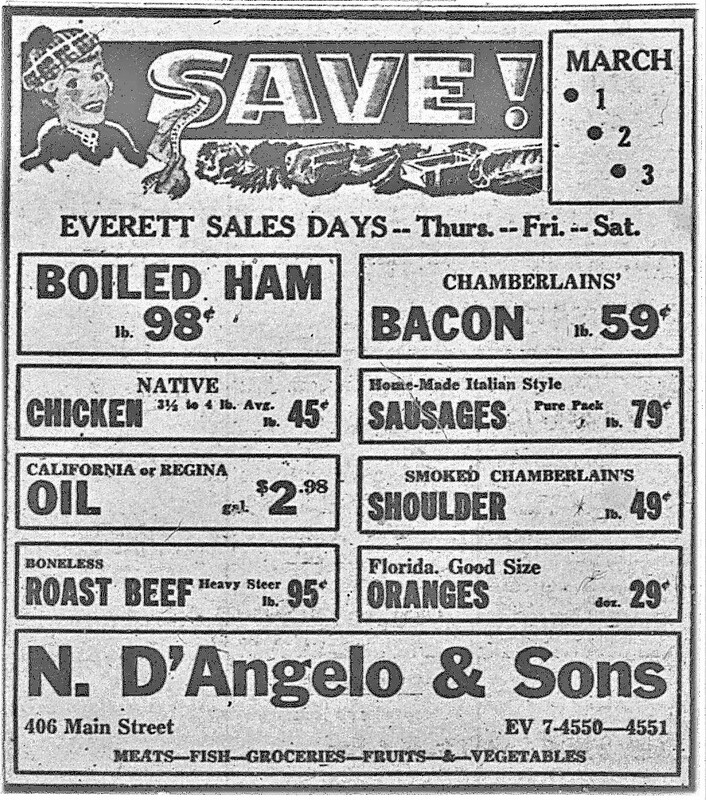
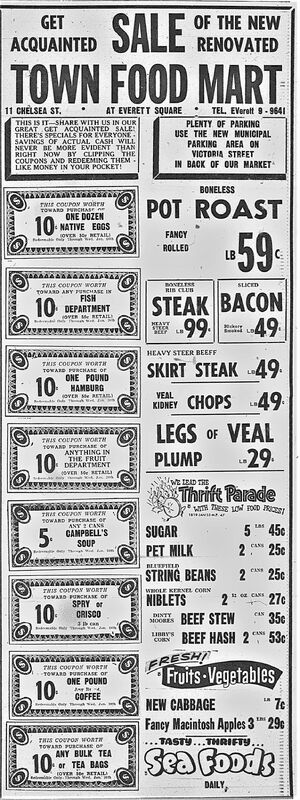
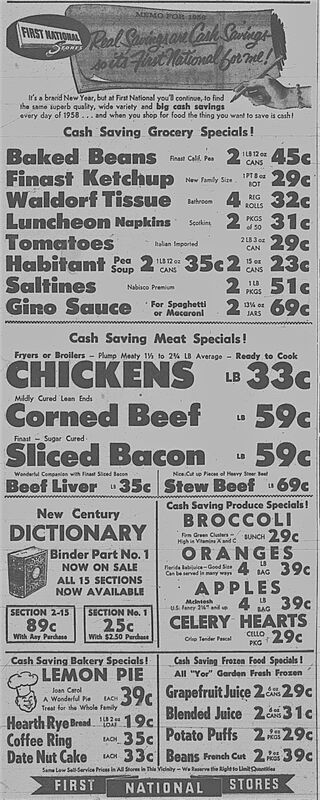
George McKinnon moved into the old First National Stores space in 1958, after that store moved to Chelsea. He eventually sold the store to local businessman John "Jackie" Boyle. The store thrived until Star Market opened 2 blocks down the street. McKinnon's held on until the mid-1980s
There were two brothers, William and George McKinnon. William opened a store on the top of Broadway. George moved into the old First National Stores space in Everett Square. In the 1970s William sold his store to Eddie Penta, a former employee of George. The Penta family has since built McKinnon's On the Hill into a successful regional butcher shop with several stores north of Boston.
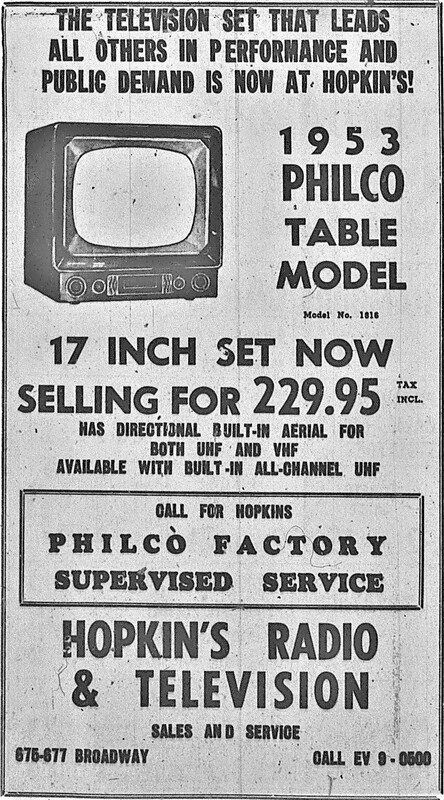
Years ago consumer goods were made much more sturdy. When something broke down, you had it fixed instead of throwing it out. Charlie Hopkins' Radio and TV store was on Broadway from the late 1940s until the 1970s.
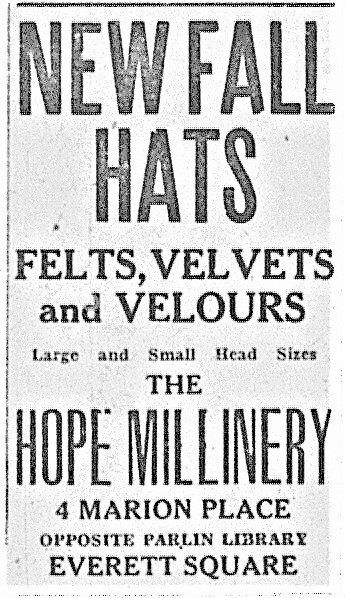
Hope Millinery's locations were a bit off the beaten path. Marian Place, in particular, was an alley between 2 buildings facing Broadway. It disappeared when the buildings were razed to make room for a new Star Market in 1970.
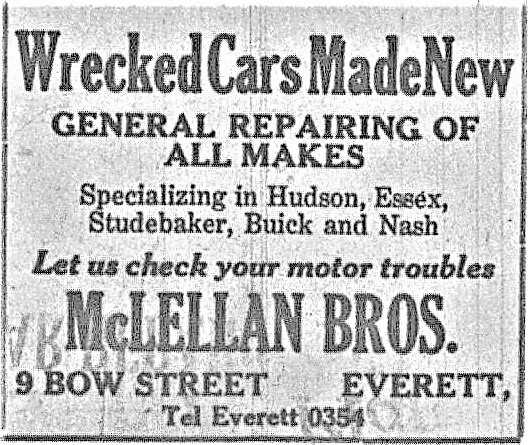
The McLellan Brothers, Ernie and Dick, started out repairing cars on Bow Street in 1922. They eventually moved to Chelsea St. and expanded into servicing boats. They are now in their fourth generation, now known as McLellan Marine.
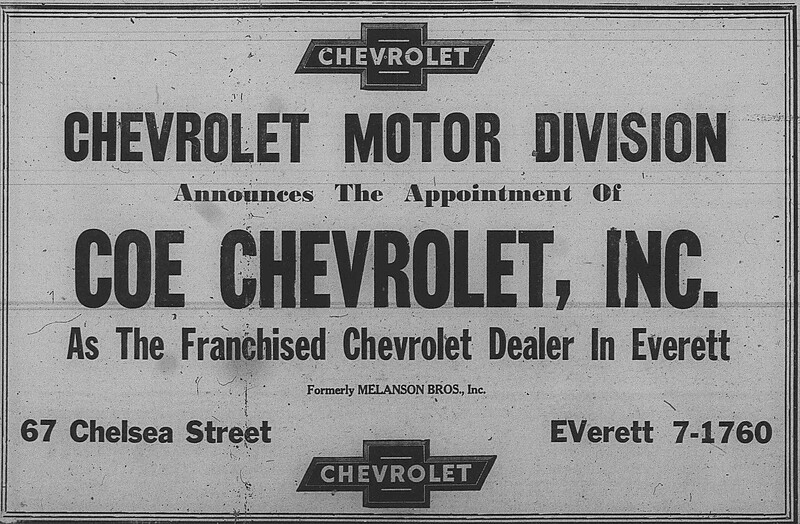
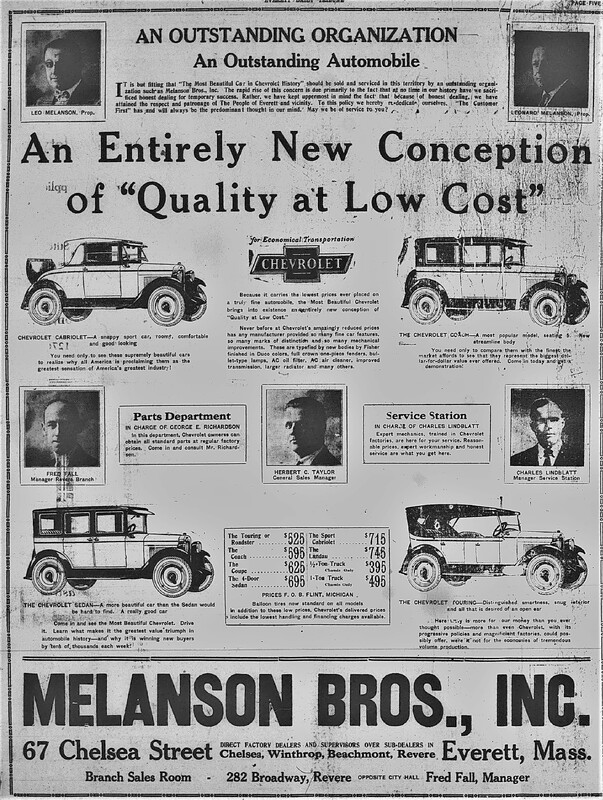
The Melanson Brothers eventually sold out to Coe Chevrolet. They were there until the 1960s, when a BMW dealership moved in. A Brazilian gracery store currently occupies the space.
The Melanson Brothers owned the first auto dealership at the corner of Chelsea and Cabot Streets. They knew the large plate glass windows facing the street would entice potential buyers to come in and look.
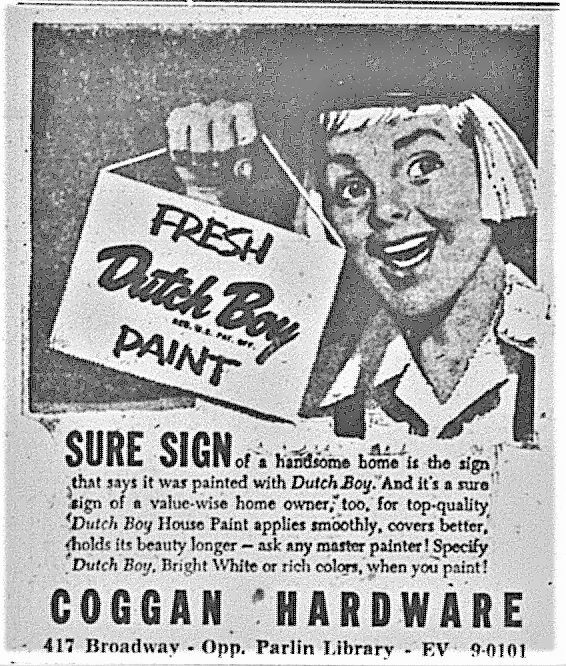
Coggan Hardware was located on Broadway in one of two buildings separated by an alley called Marion Place. Both buildings (and Marion Place) were demolished to make way for Star Market in 1970. Walgreens now occupies the building.
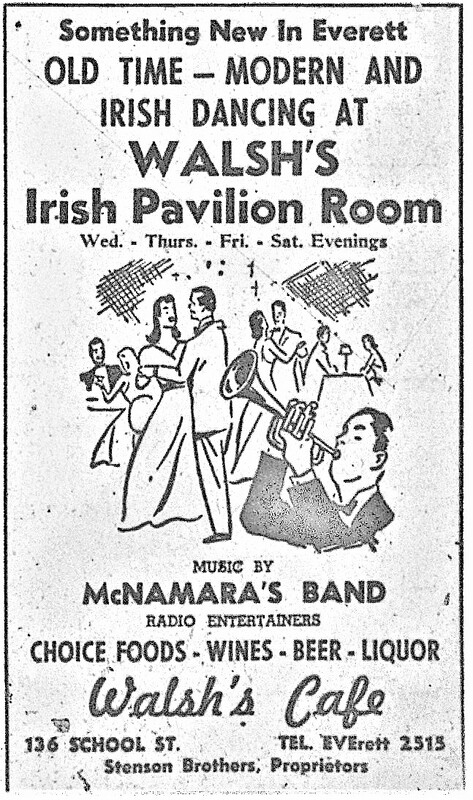
Walsh's Cafe started after World War II and featured Irish music. Eventually they were sold and changed their name to the Irish American Club. It met its demise in the School Street fire in April 1969, and was not rebuilt.
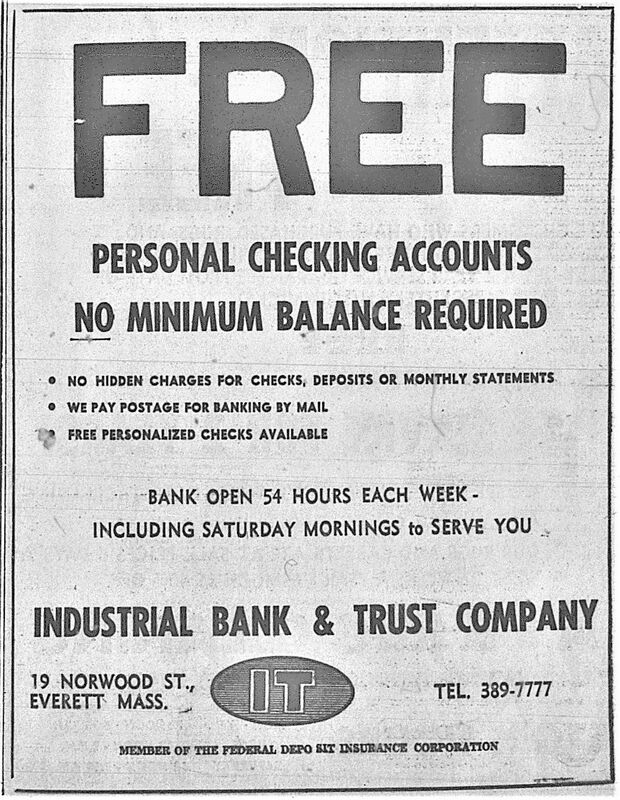
Industrial Bank and Trust was an attempt to set up a local bank in Everett. It was a miserable failure, and several of their officers were indicted for violation of Federal banking laws. Their assets were eventually purchased by the Coolidge Bank and Trust Co. of Watertown.
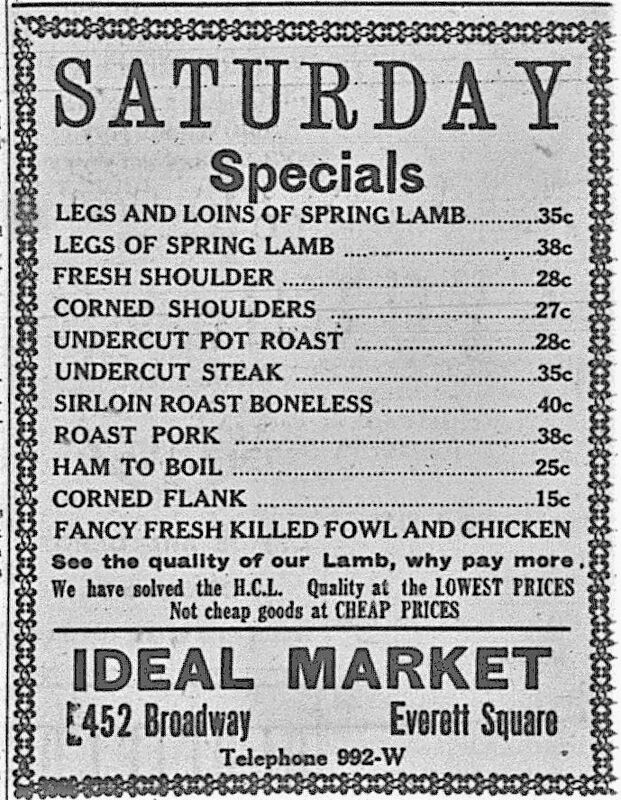
The original Ideal Market didn't last very long. They were out of business by 1924. A new owner eventually took over the business and it lasted through the Twenties
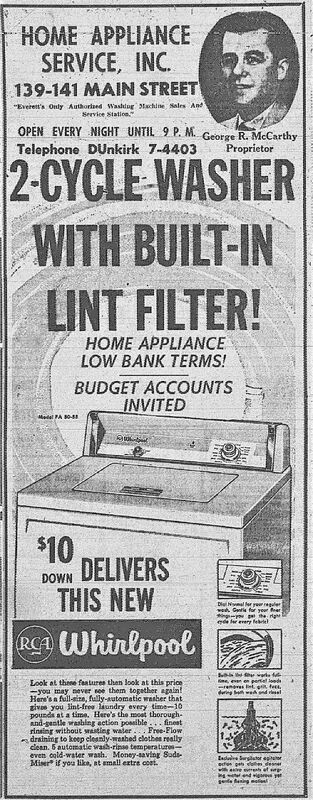
George R. McCarthy ran the Home Appliance Service on Main St. for 45 years. His other job was Mayor of Everett from 1968 until 1977, when he took a position with the Jimmy Carter administration.
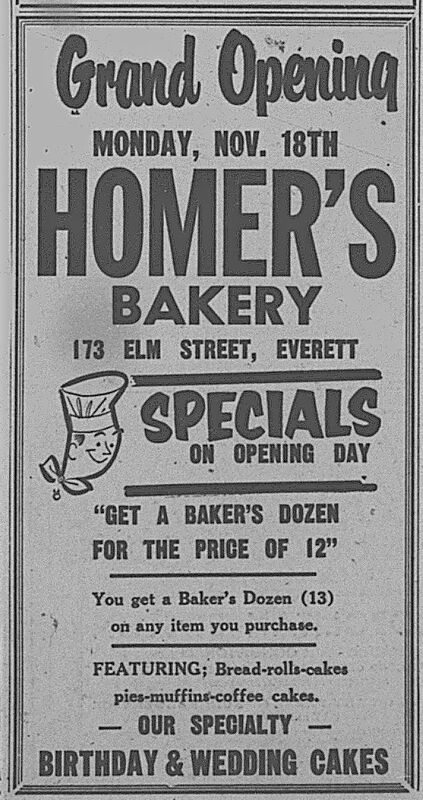
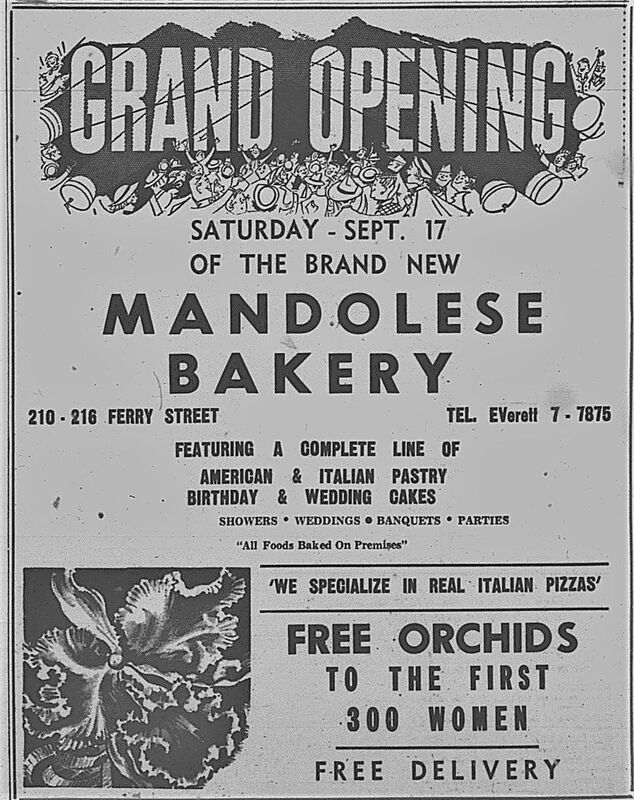
Homer's Bakery opened in 1957. They were good. Elm St. opened about 25 years later in the same place. They were even better. On holidays the line goes down the street and around the corner.
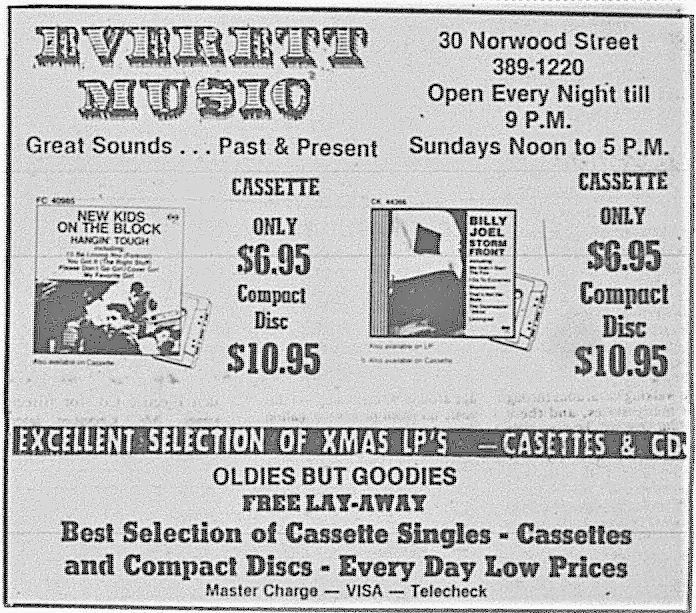
Everett Music had several locations in Everett Square, ending up at 30 Norwood St., after a fire had destroyed their previous site in 1965. They remained there until the owner's retirement in 1999.
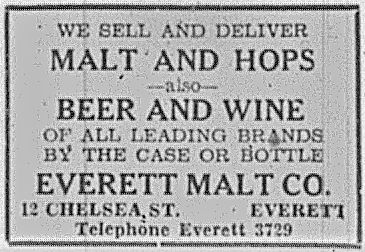
Everett Liquor Company started as Everett Malt Co. in 1934, and quickly changed their name. They were at the same location on Chelsea st. until the 1960s
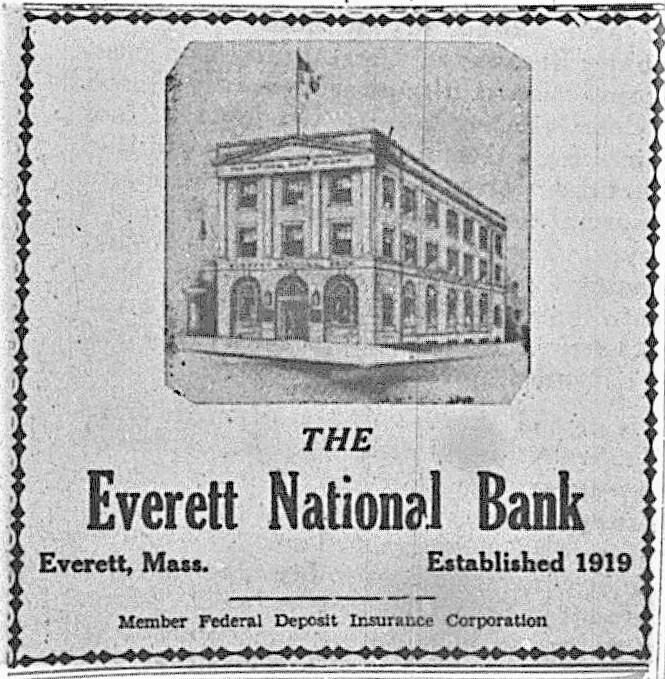
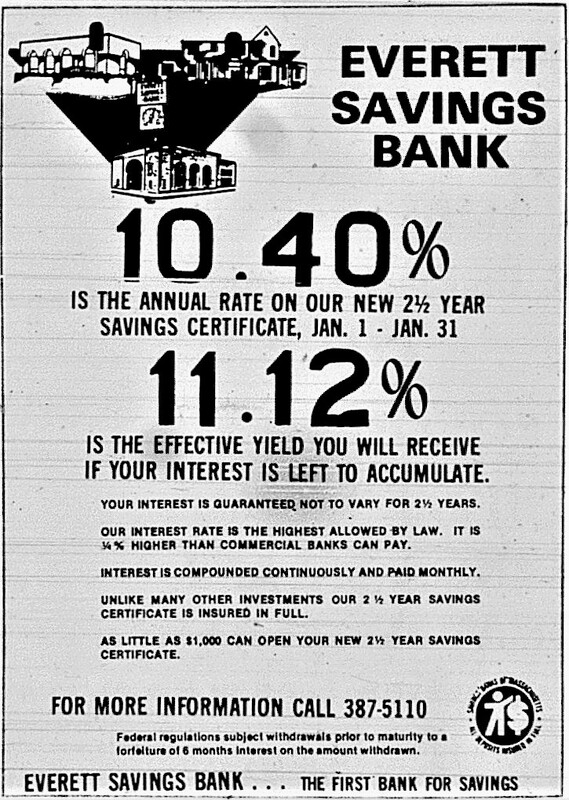
Everett Savings Bank is one of the few local banks that haven't been bought by a larger institution. Now under the name of Eagle Bank, they have been in Everett since 1889.
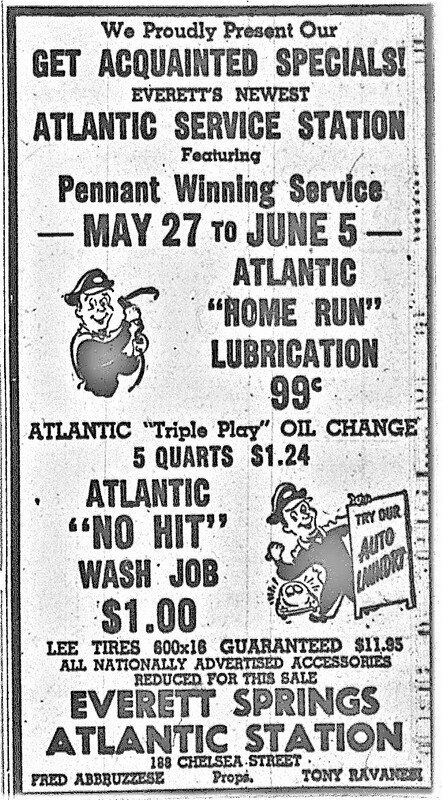
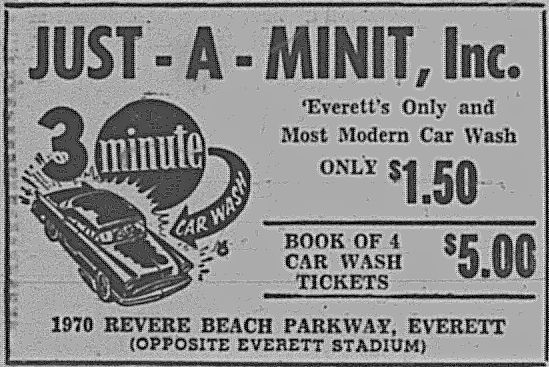
The car wash on Revere Beach Parkway has been there since the late 1940s. It has had at least 4 different names. It started as Just-a-Minit, became Car Pool at one point, Simoniz, and Sparkling Image. If there are more we are still looking.
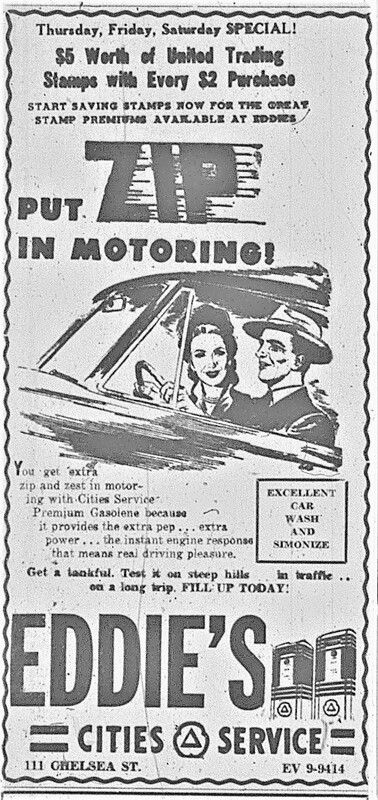
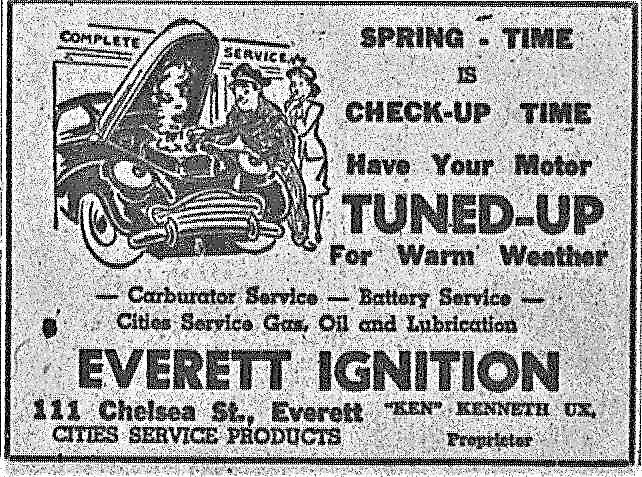
After Everett Ignition moved out, 111 Chelsea St. became Eddie's Cities Service. After a few years, it became Don's Cities Service, even though the oil company had changed its name to Citgo. Today the building houses an auto detailer.
Everett Ignition (also a Cities Service station) started out on Chelsea St., at the corner of Winter St., then moved down the street to Everett Ave., the present site of KFC.
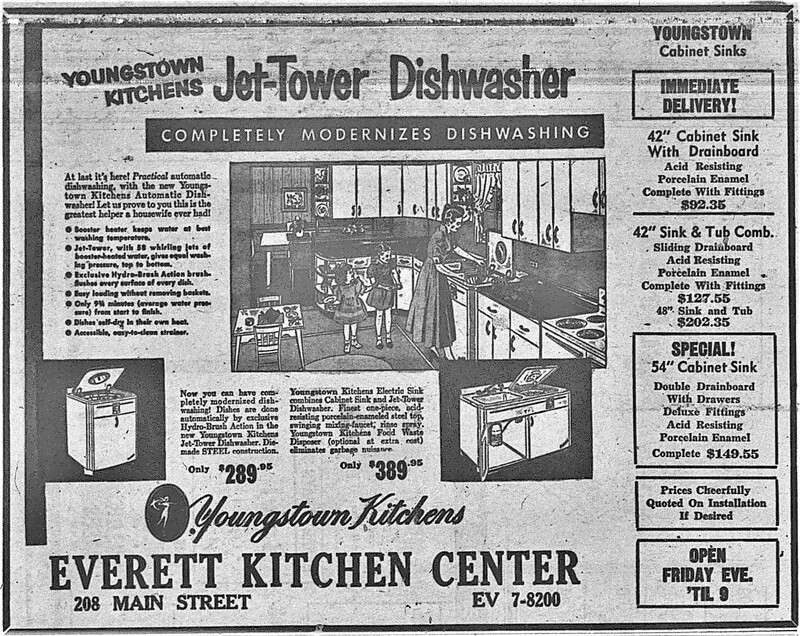
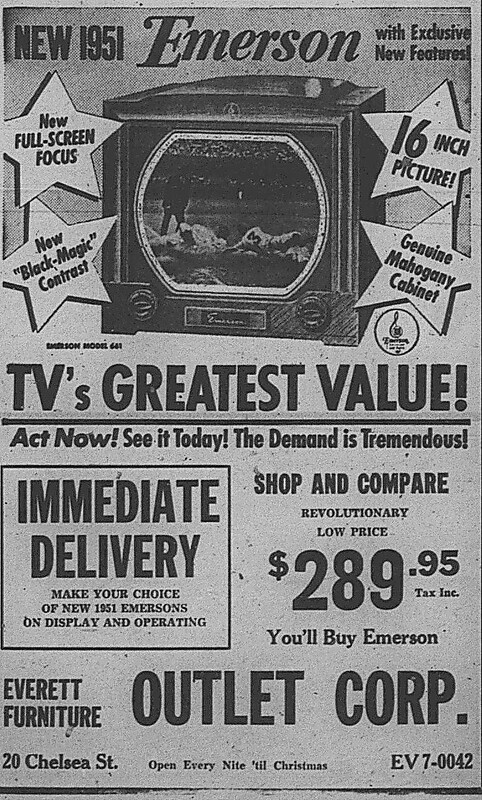
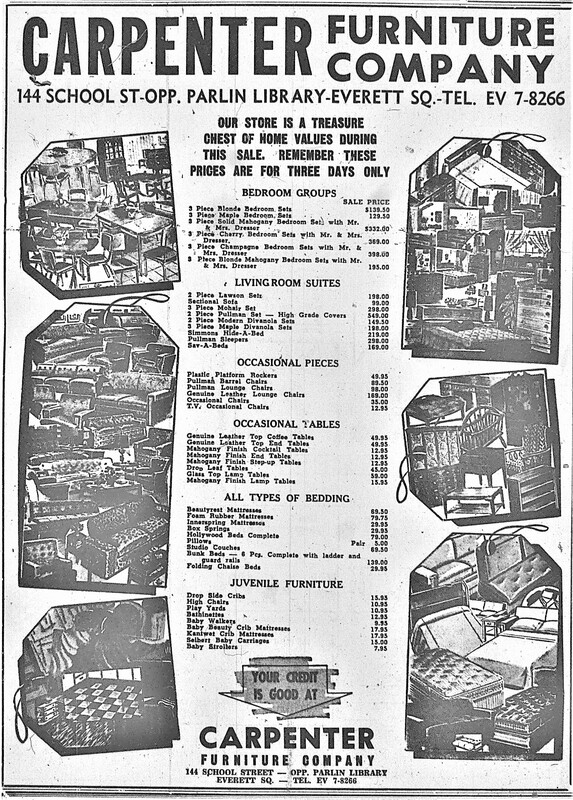
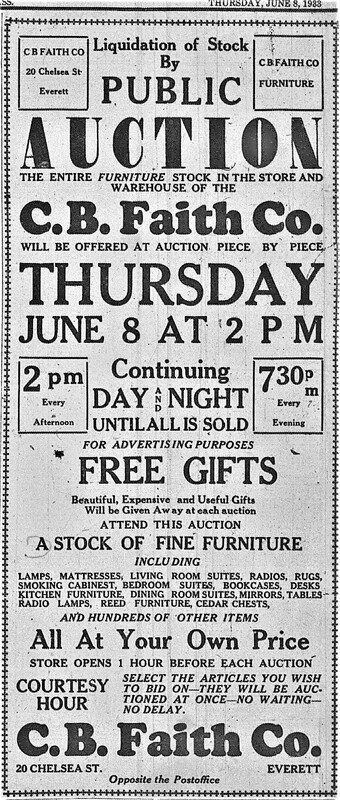
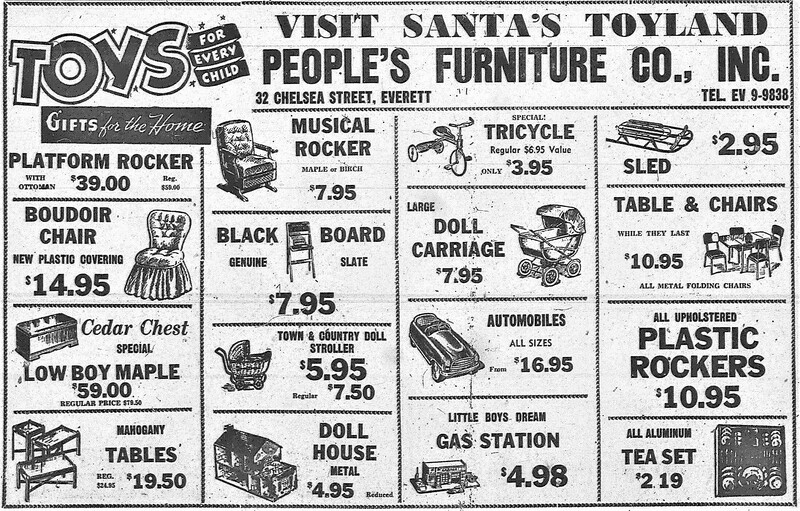
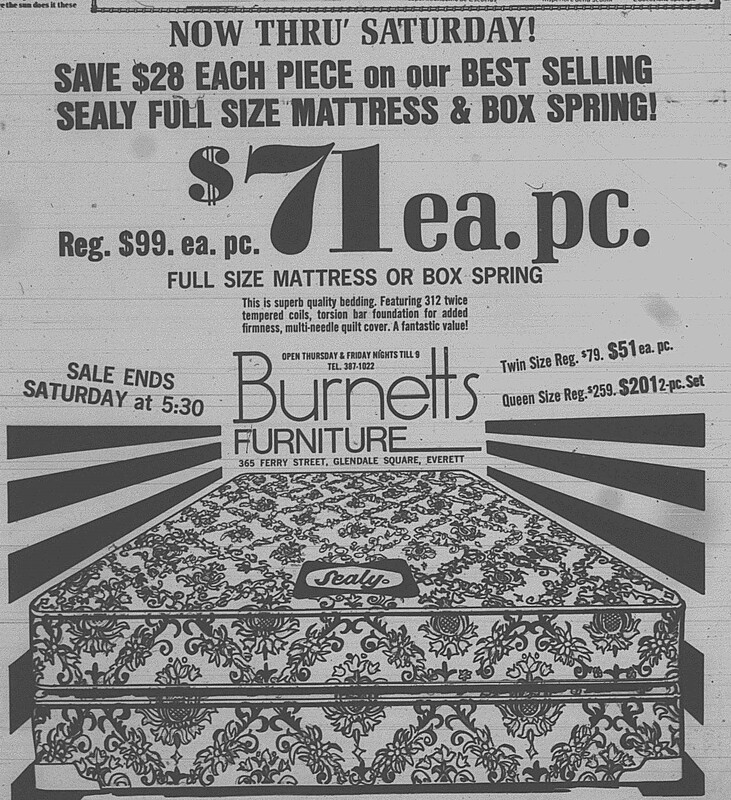
Everett Furniture Outlet was founded in 1934, when William Cutler bought the old Outlet Furniture Company . They had a good run in Everett Square, lasting until the 1970s. The 16 inch TV advertised in 1950 for$289.95 adjusted for inflation is nearly $4000.00 in 2023 dollars !
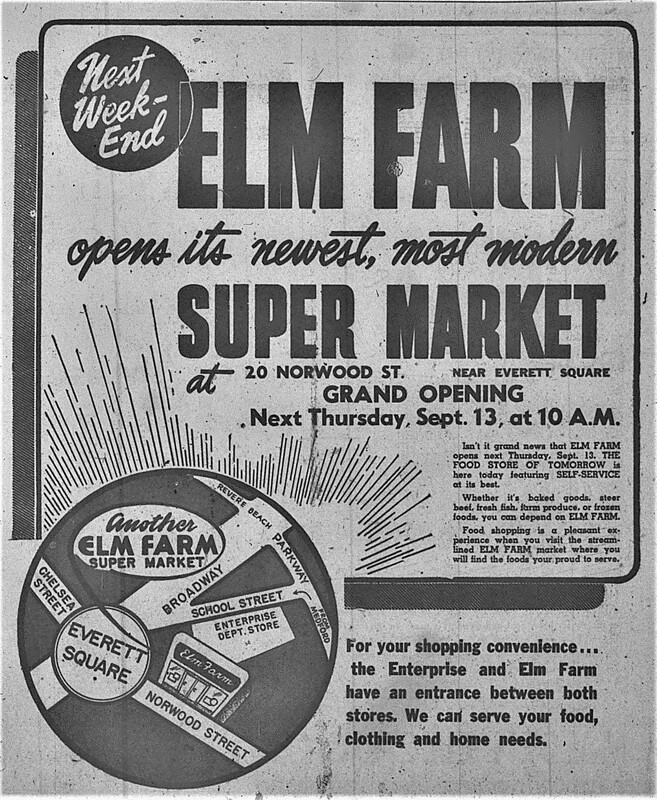
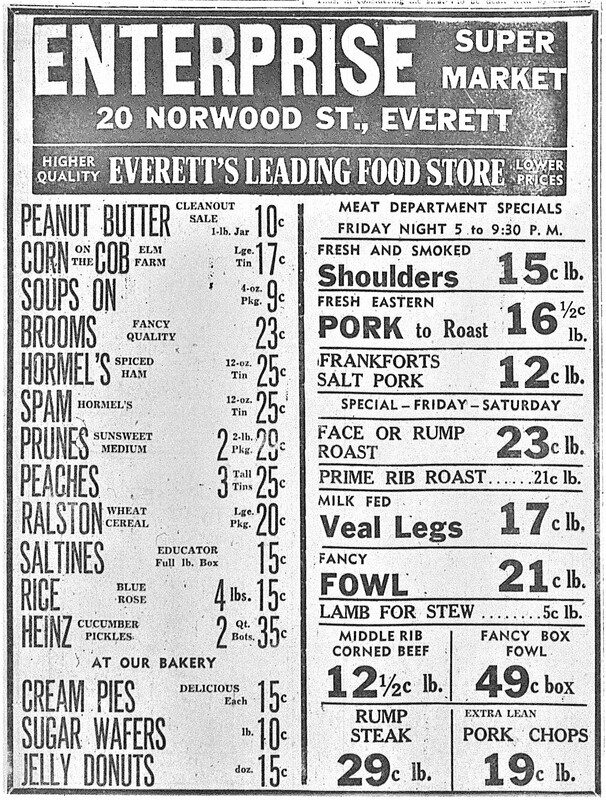
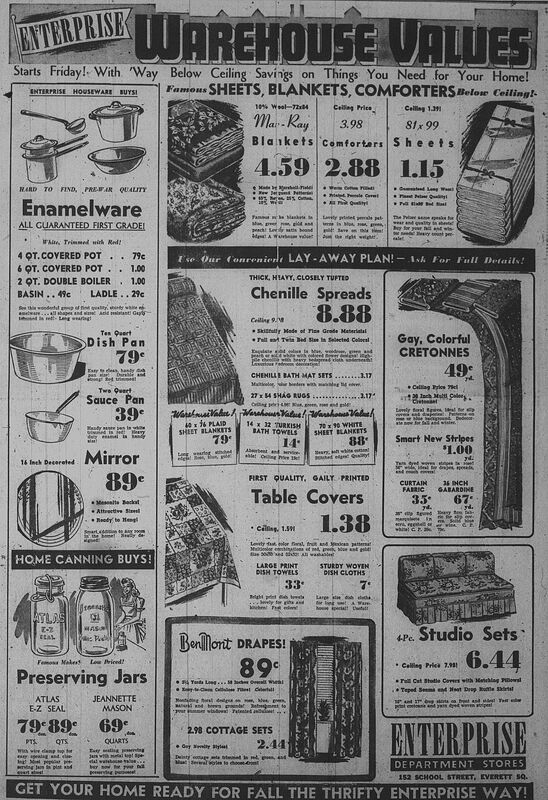
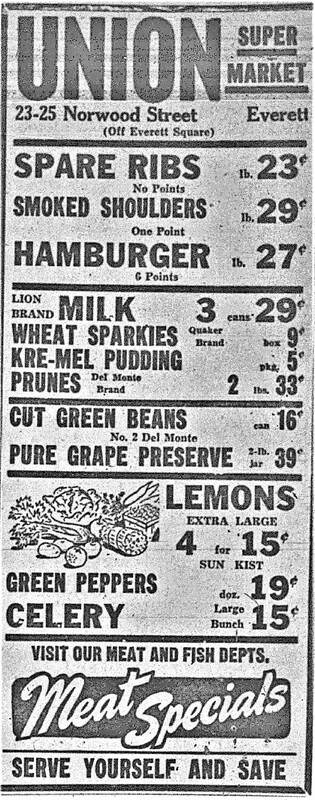
The Enterprise Store in Everett Square had a "rear section" opening up to Norwood Street. They used this section as a "super market", a novel idea at the time.
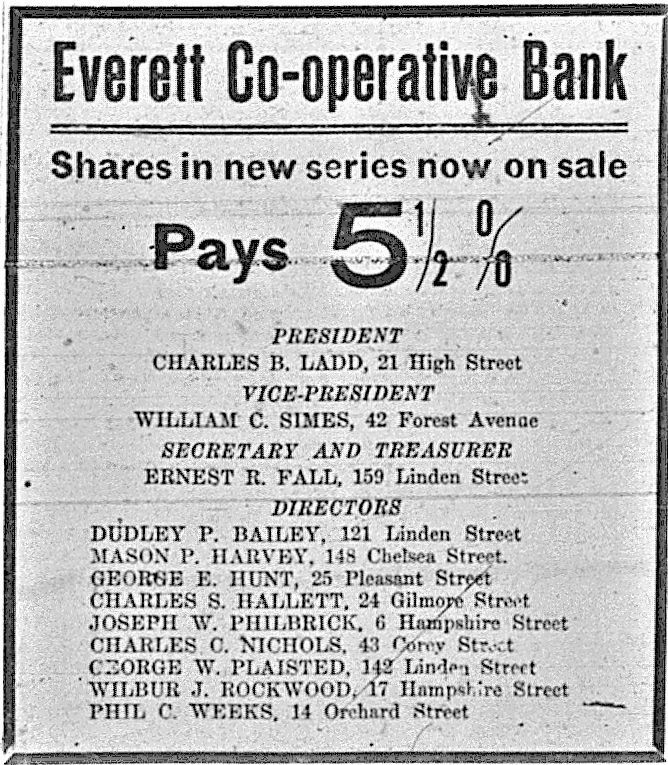
The Everett Co-Operative bank was founded in 1890 and still exists under the name Everett Bank. Their early directors contained several of the most powerful business people from the early days of Everett
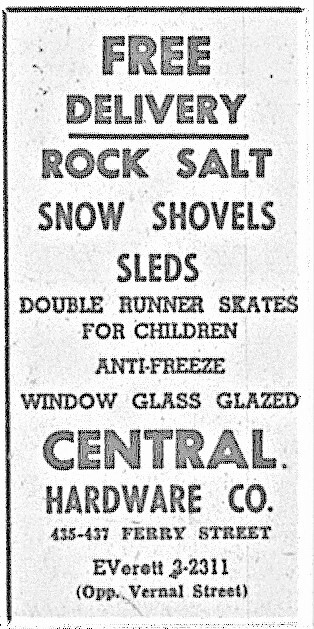
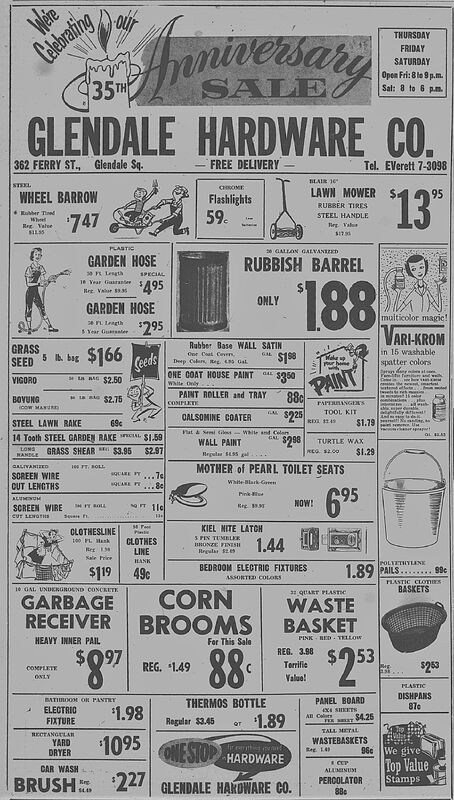
Central Hardware was on Ferry Street for more than 85 years. After they closed there was only one other independently owned hardware store left in Everett.
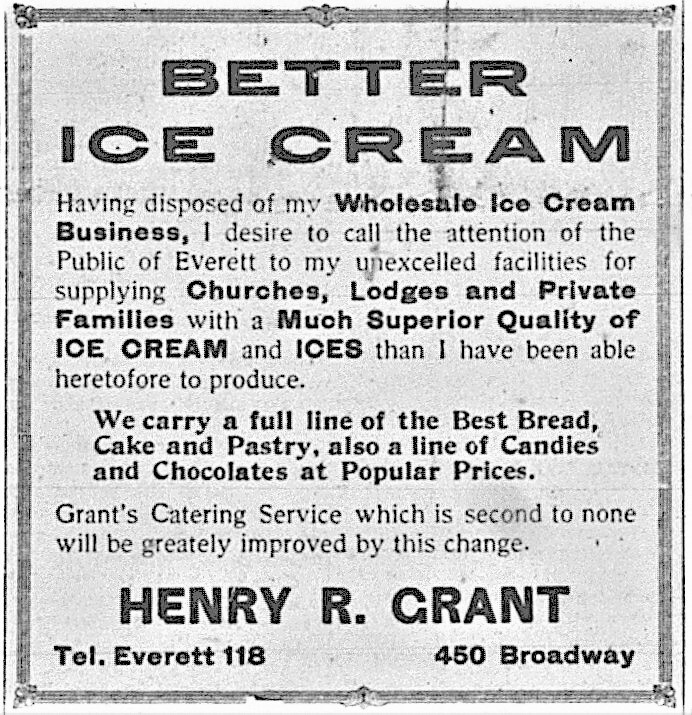
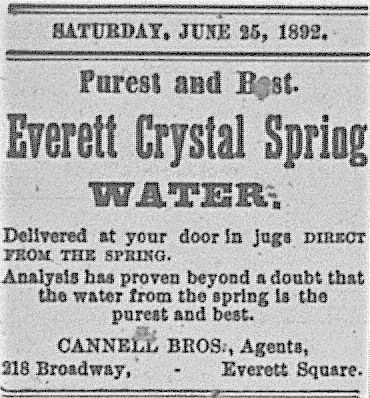
The Henry R. Grant Caterers had several locations in Everett, finally landing at 176 Chelsea St., the site of the old Everett Spring Bottling Company. They lasted more than 50 years.
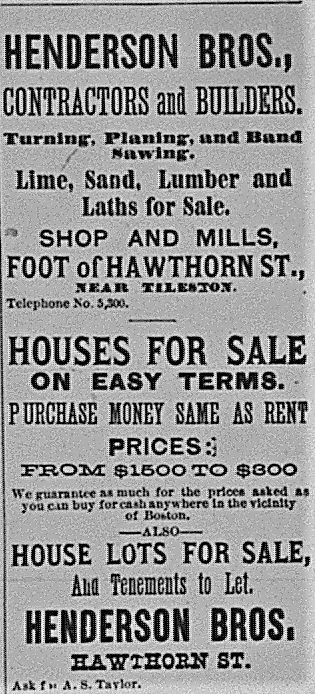
The Henderson Brothers built an entire neighborhood in Everett ; originally called Hendersonville, then the Henderson Village, and finally "the Village". Most of their buildings are still standing.
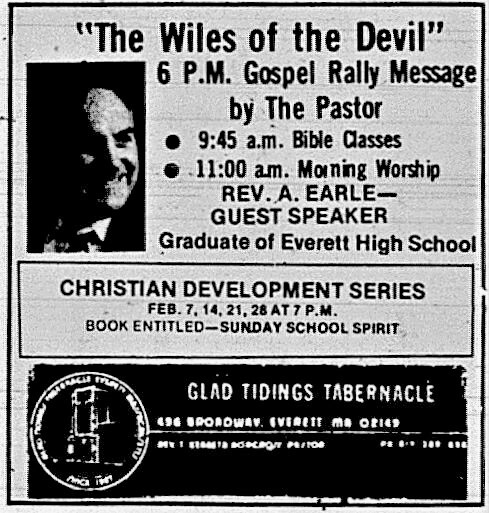
Glad Tidings Tabernacle bought the old Capitol Theatre building after that business folded in 1957. They were there until the early 2000s. The building was purchased by a developer and converted to apartments and office space.
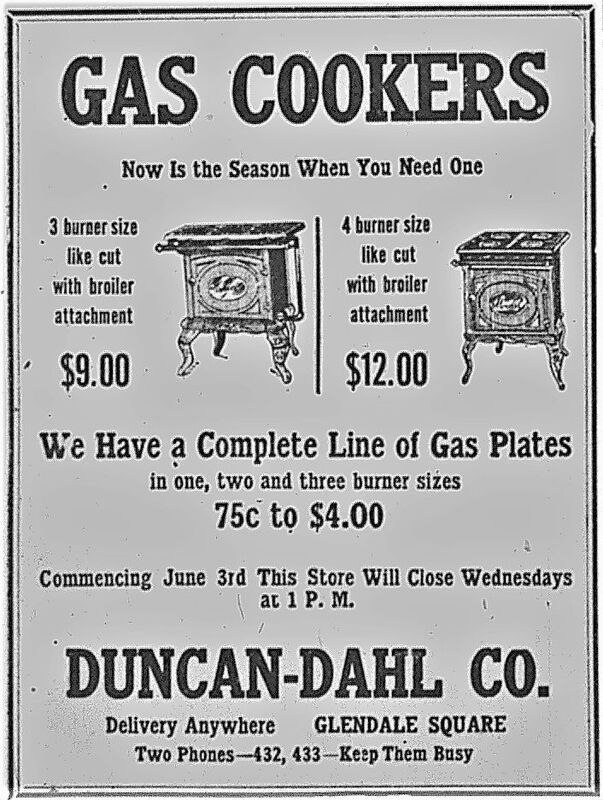
Duncan -Dahl Hardware did business in a time where "traveling over the hill" to Glendale Square was a big deal. This was before cars were plentiful, so most people either walked of took the streetcar.
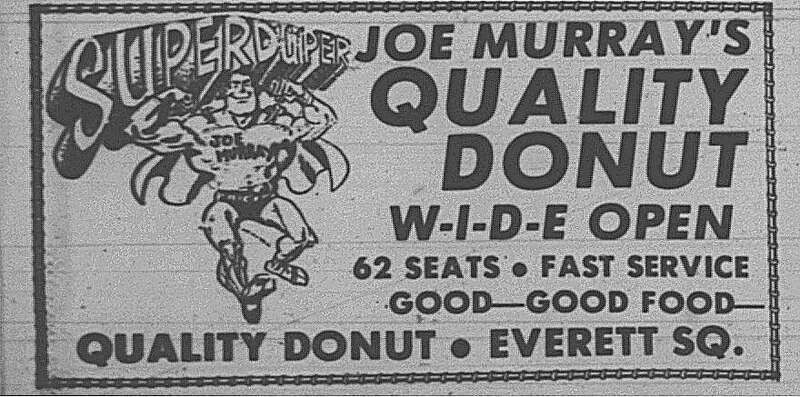
This is one of the more bizarre stories involving businesses from Everett. Quality Donuts was a popular breakfast place in Everett Square for many years until the 1970's. It was owned by a married couple . The couple was involved in a nasty divorce sometime in the 70's. The end result was two donut shops right next door to each other on Broadway. One was "Joe Murray's Original Quality Donuts" the other was "Donut Villa". This arrangement lasted about a year, when Quality Donuts gave up. Donut Villa lasted about three decades in the Square before they gave way to Dempsey's, another breakfast place still standing to this day.
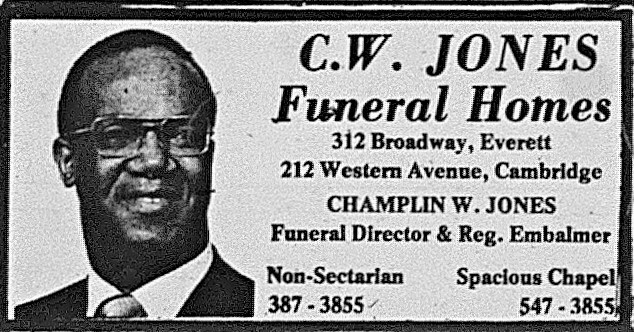
Jazz musician Champlin W. "Champ" Jones owned a funeral home on Broadway during the 1960s and 70s. He is, to date, the only person of African-American descent to own a funeral home in Everett.
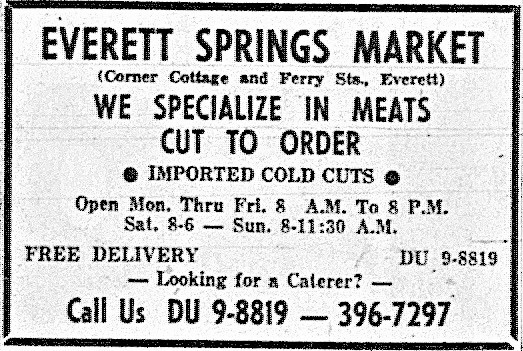
Nearly every neighborhood once had a "corner store". They were usually mon-and-pop operations making enough money for one family to live on. No matter what the official name of the store was, the local kids always called it something else. The Everett Springs Market was known as "Tony's", as was the Elm St. market in Woodlawn, and Nemo's Variety on Clinton St. Who was Tony? Maybe it was a former owner. Maybe it was folklore. We will probably never know.
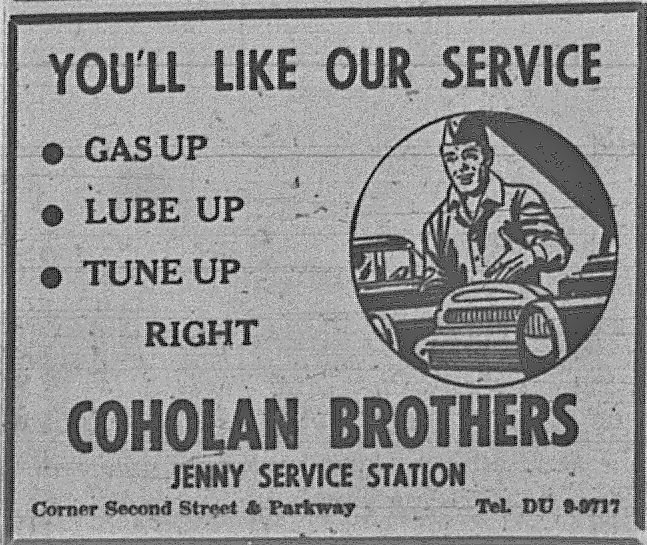
Jenney Oil was another local distributor who didn't survive the oil embargo of the 1970s. Harry "Buddy" Coholan was a founding member of the Everett Rotary and a long-time director of the Everett Chamber of Commerce.
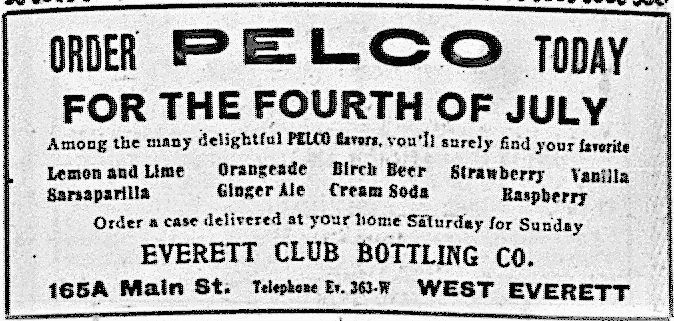
The Everett Club Bottling Company delivered "tonic" door-to-door in Everett for more than 60 years. Their Pelco brand still has fans among bottle collectors. Items with the Pelco label are frequently sold at antique shows and online.
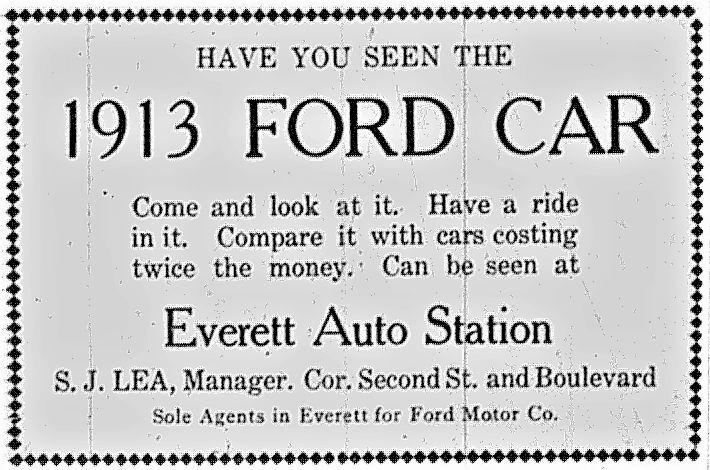
Everett Auto Station was an early Ford dealership located at the corner of Second St. and the present-day Revere Beach Parkway (known as the "Boulevard" in those days.)
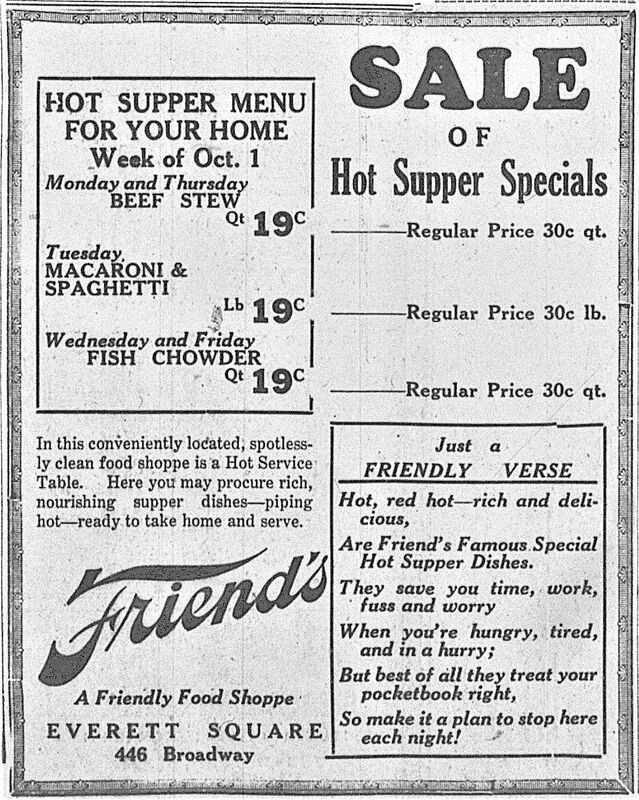
The Friends company was known for their "Boston baked beans" (even though they were made in Malden). But they also had a food store in Everett Square which sold a large number of hot dishes as well as bakery goods.
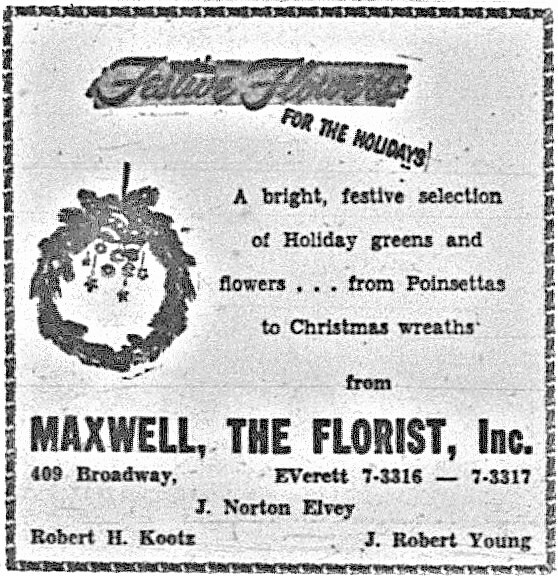
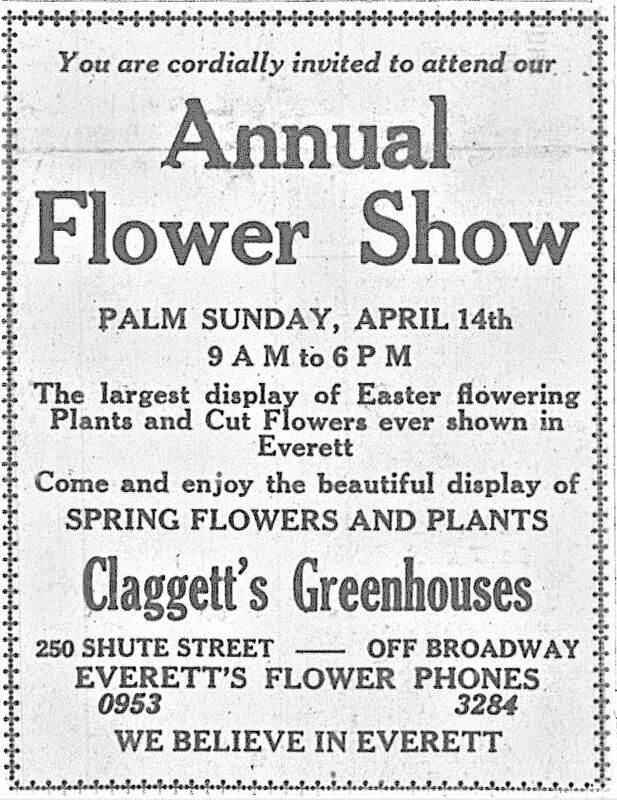
Nowadays florists order their stock from a distributor, who ships it (usually frozen) to the store. Back when Everett had plenty of space, florists could grow their own in greenhouses. Walter Claggett had several greenhouses on the corner of Shute St. and Broadway. He ran the business until his death in 1936, when his widow Ethel took over until her death in 1958.
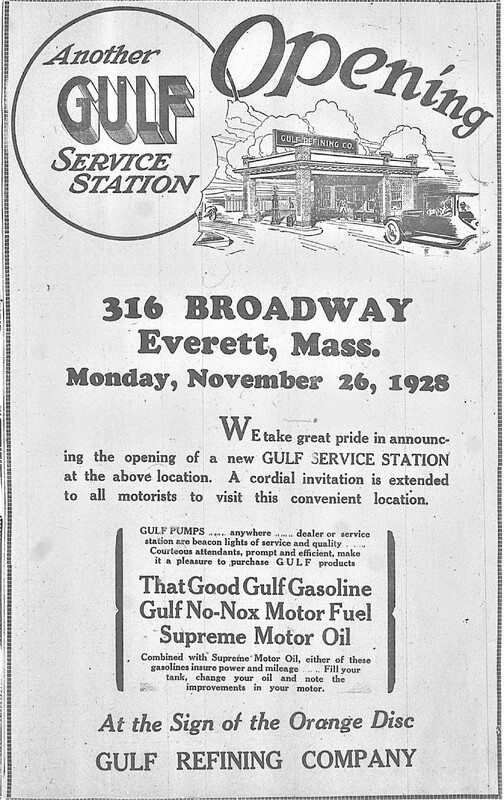
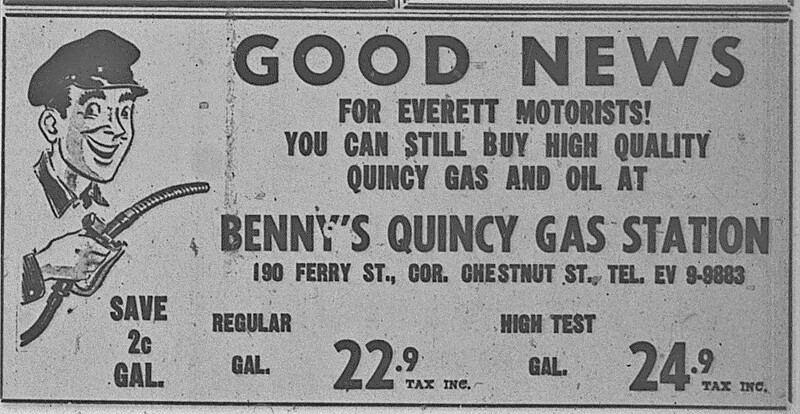
Quincy Oil was a local distributor of oil products and had several stations around the Boston area. Their location at the bottom of Chestnut St. lasted until the mid-1970s, when the Arab oil embargo put many small gas stations out of business.
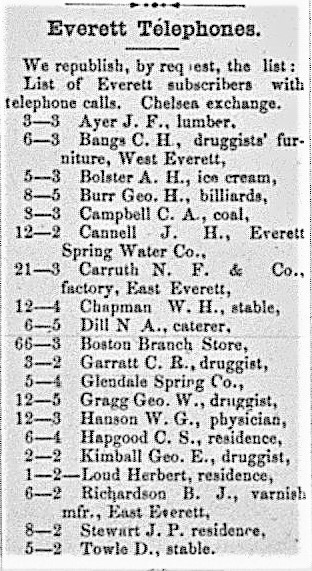
The area where Chelsea and Ferry Streets meet used to have fresh water springs running underneath. A water bottling facility was erected and sold fresh spring water until the springs dried up in the 1920's
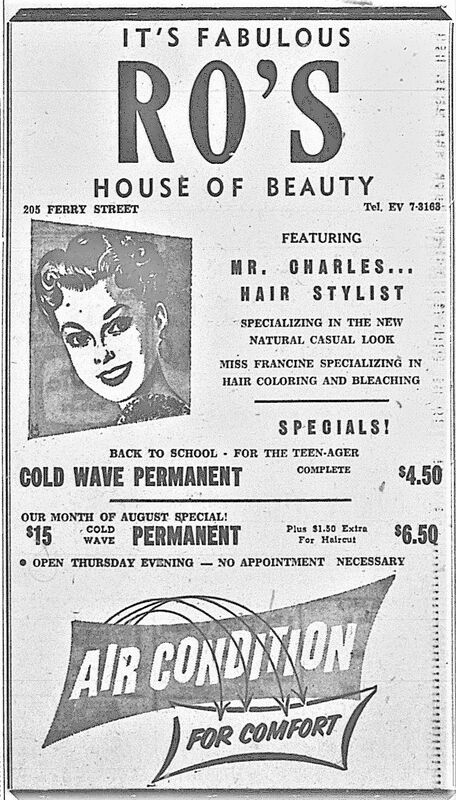
Charles Ro opened a hair salon on Ferry Street in 1955. It was successful, so he opened a couple more. Charles also had a hobby. He liked model trains. He started selling trains out of the back of his salon. Eventually the trains were more popular than the hair business. In 1972 he opened a train store in Malden. Eventually, the Charles Ro Supply Company became the largest model train store in the country, and the largest Lionel Train dealer in the world. Not too shabby!
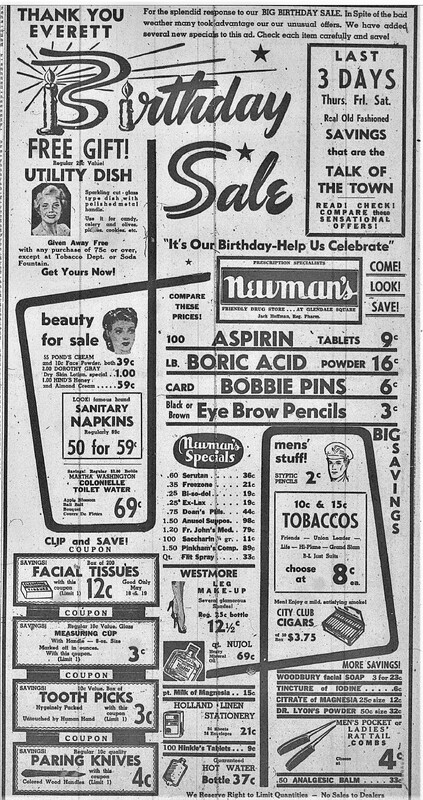
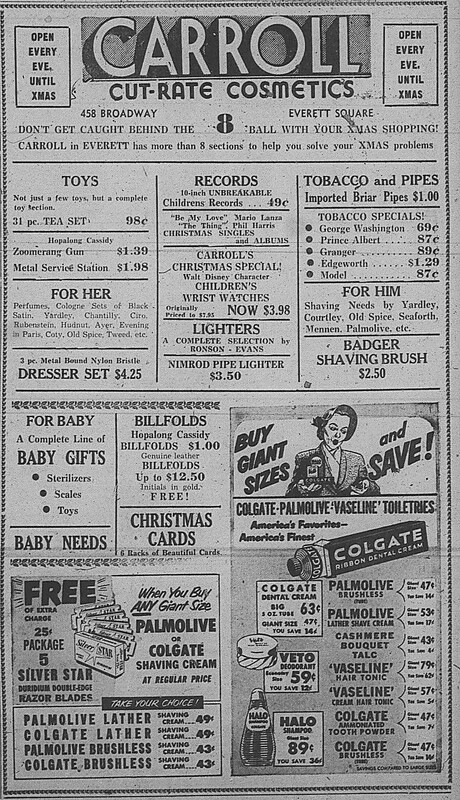
Carroll Cut Rate was in a long, extremely narrow space on Broadway in Everett Square. Those walls were packed to the gills with just about every toiletry you could imagine. Just about everything you find in today's mega-drug stores could be found at Carroll Cut Rate.
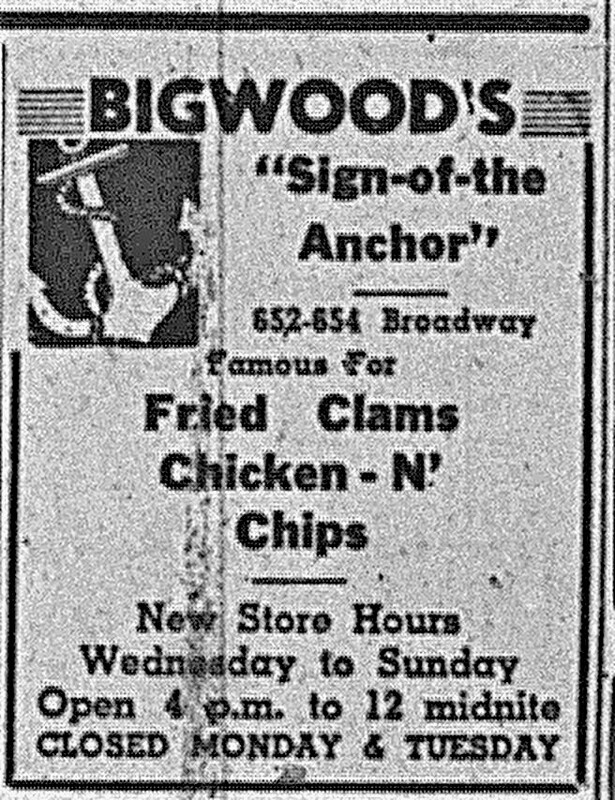
During the years Bigwood's Sea Grill was on the top of the Broadway hill, the Catholic Church forbade eating meat on most Fridays. Seafood stands thrived. Furthermore, fish was cheap and plentiful. That all changed in 1966, when the rules were changed allowing Catholics to eat meat on Friday. That was the beginning of the end for places like Bigwood's
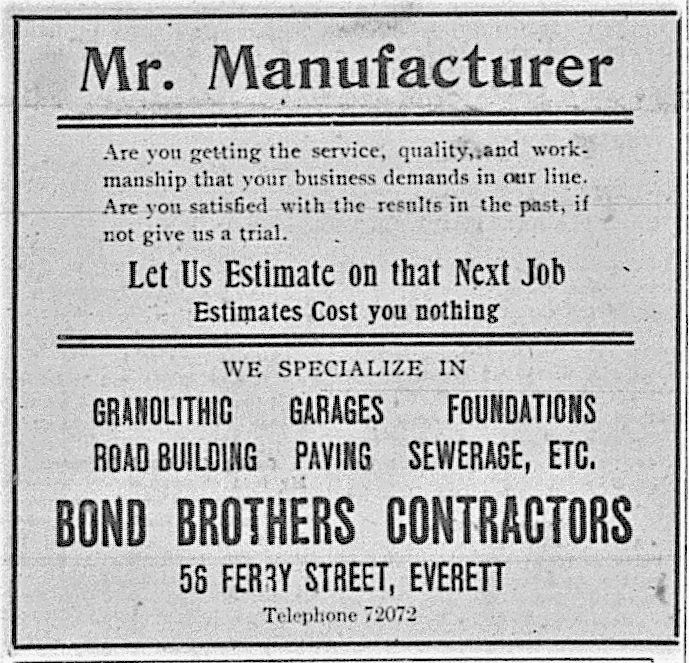
The Bond brothers started building sidewalks in 1907. They have been growing for more than a century and, as Bond Construction, are one of the largest contractors in the area.
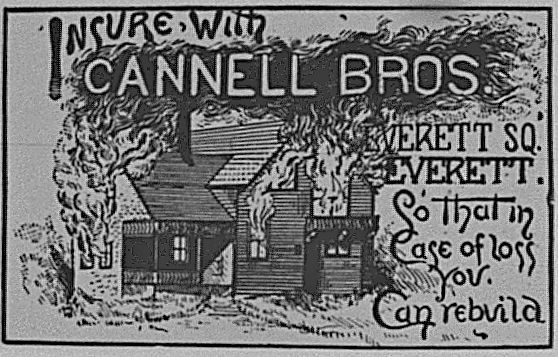
The Cannell Brothers were some of the original builders of the Town and City of Everett. They were members of the town council, held several official positions, and ran a thriving insurance business. Cannell Place, off Ferry St. is named after them.
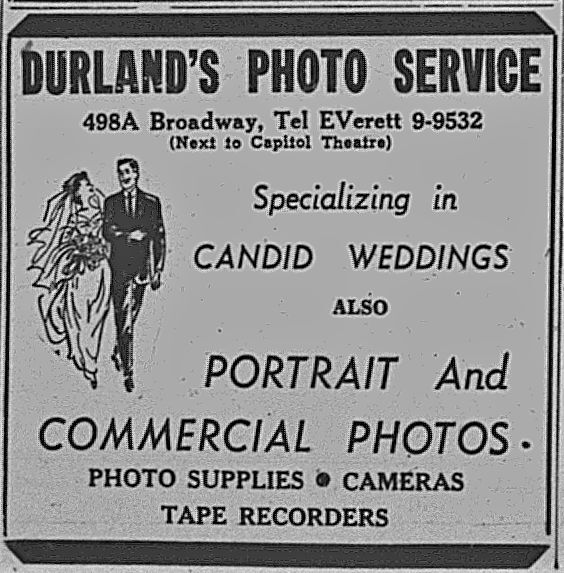
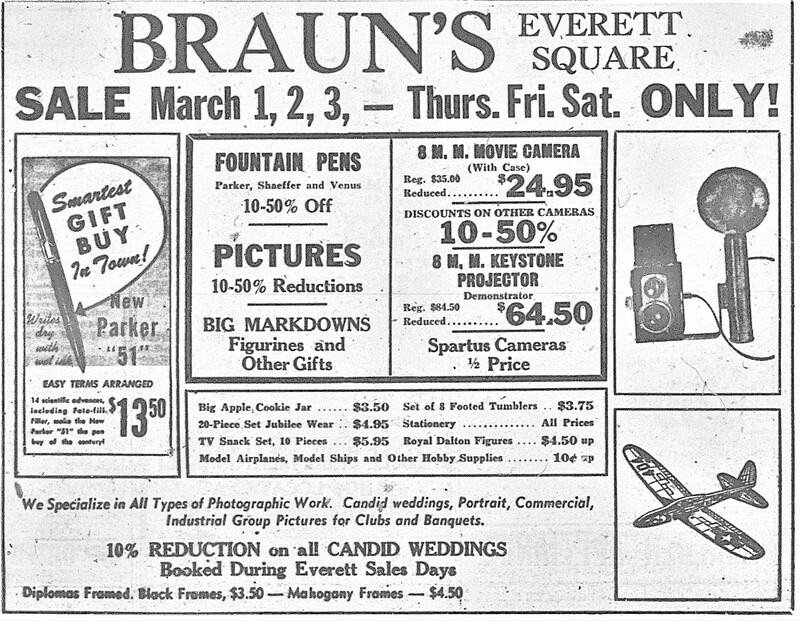
Gus Braun is a legend in Everett history. For many years he photographed nearly every major event in Everett. His photos are still circulating nearly 75 years after his death. He was also a member of the Everett School Committee, and was active in city affairs until his death in 1949. His photo and card shop had two locations. First, on Mansfield St., and then around the corner on Broadway.
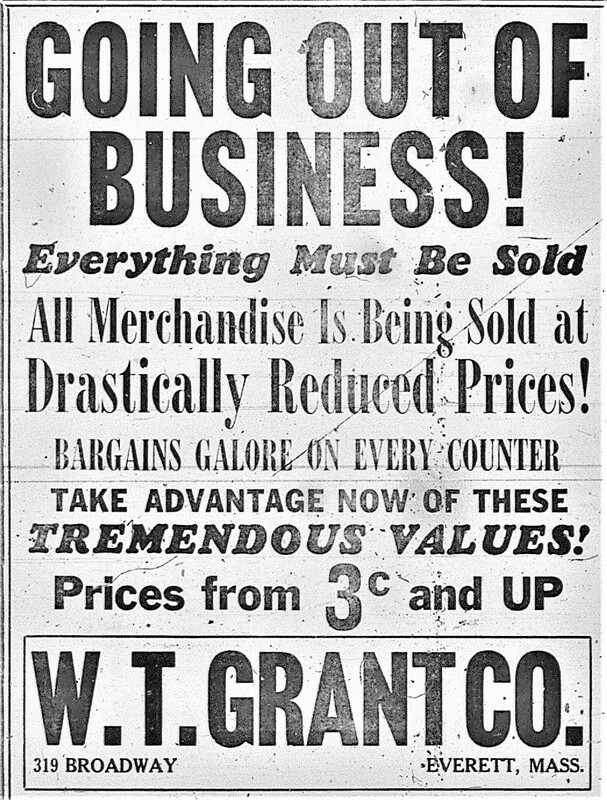
W.T. Grant was founded in Lynn in 1906 and had stores nationwide for decades. They had two locations in Everett. The first one in Everett Square closed in 1950. Seven years later they opened in Glendale Square and were there until the mid-1970s
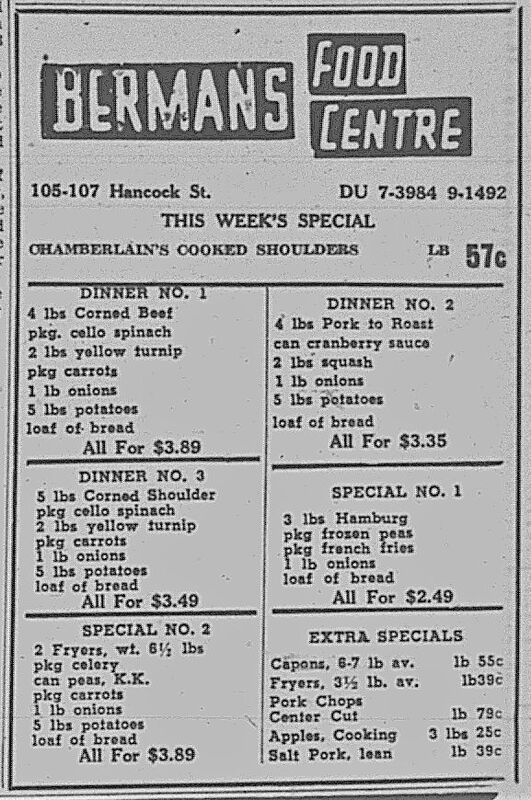
One of the latest trends in shopping is to have all the ingredients of a meal delivered to your door. Berman's Food Centre was doing the same thing 70 years ago.
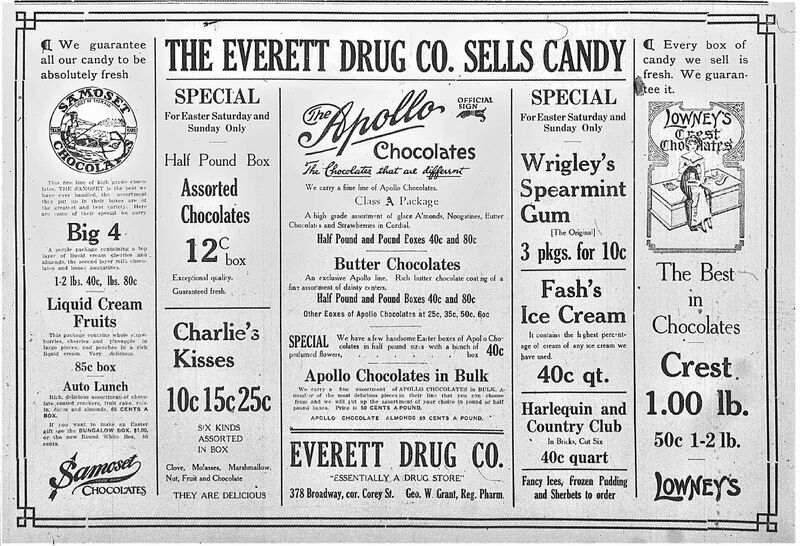
At various times there were three establishments called "Everett Drug Store". The original was at the corner of Chelsea St. and Broadway. The second was on the corner of Broadway and Corey St. This eventually became the Corey St. Pharmacy, and after that the Prescription Shoppe. The third was on Main St until the 1960s.
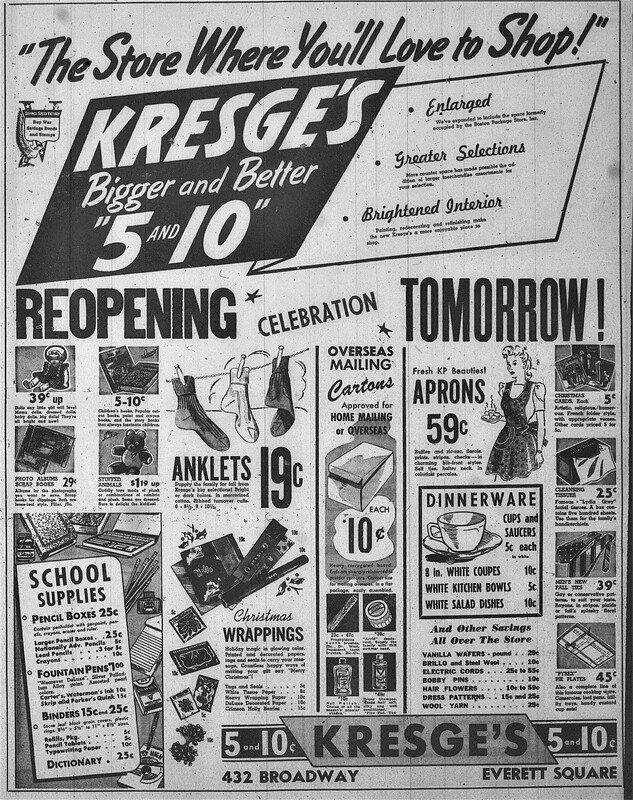
Everett had its share of "5 and 10 cent" stores over the years from J.J. Newberry's, Woolworth's, and Grant's, all the way up to today's "Family Dollar". The most beloved of these was Kresge's, which stood on on the corner of Broadway and Norwood St. from the late 1920s to the mid 1960s. You could buy a pet bird, eat at their lunch counter, and purchase lots of inexpensive household items. By the mid-1960s, the S.S. Kresge Company began closing stores like the one in Everett, so they could focus on their growing KMart chain.
The Enterprise Stores was a regional chain founded by Philip Feldman and Samuel Glass. They were in Everett Square at 152 School St. from World War I era until 1960. The store name was changed to J.M. Fields in the early 50s. They remained on School St. until 1960, when the owners closed down the location to devote more time to the Wellington Circle store opened a few years earlier.
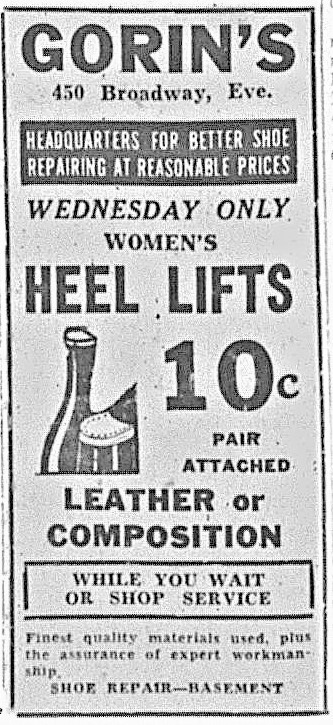
Gorin's lasted 60 years in two locations in Everett Square. People would flock to Gorin's "dollar days" to find good buys. During its last few years, Gorin's was part of the Almy's chain of stores before closing in the late 1980s. The building was destroyed by a massive fire in November, 1991 and never rebuilt.
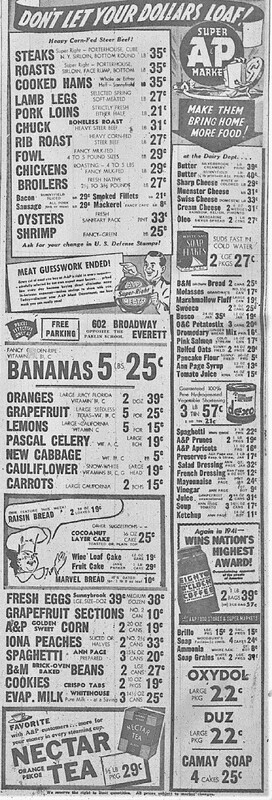
At one time A&P was the largest grocery store chain in the USA. They had stores everywhere, and Everett was no exception. The location most people today remember was at the top of Broadway hill, across from the Parlin School. A&P was in Everett until the mid-1960s. The chain eventually closed down in 2015
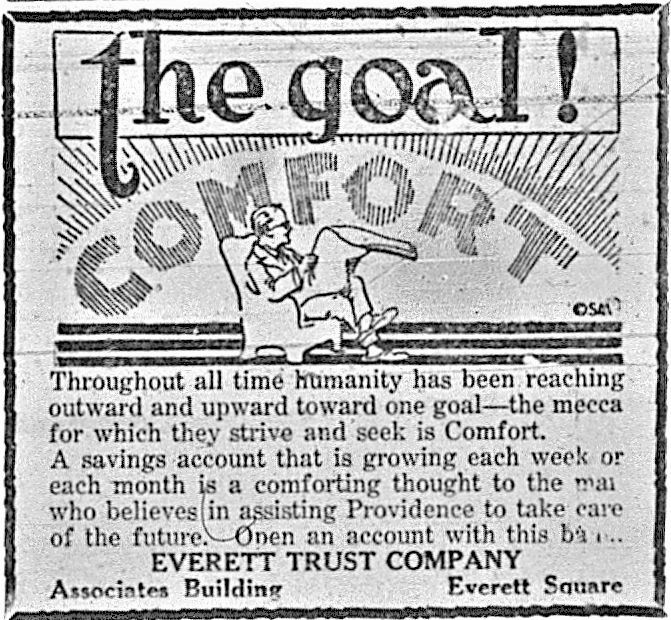
The First National Stores brand goes back to the 1920s and was headquartered in Somerville, Massachusetts. First National had many Everett locations in the early days, most notably in North Everett next to the old MTA car barns, and Everett Square in the Associates Building. As many grocery stores became "supermarkets" in the 1950s, First National moved to larger areas with bigger buildings and more parking.